Theater · In progress
COORDS
September 2025 - Present
An ultra-wideband mesh that tracks actors and props and steers a moving-head spotlight — started as an NJIT capstone, now a personal theater project.
NJIT capstone, May 2026. No longer a course deliverable — now a personal theater project. Custom boards designed, not yet fabricated.
The Goal
This was our ECE capstone at the New Jersey Institute of Technology (NJIT) — Jeremy McLynch, Sotiris Psofakis, and I. We built an indoor tracker that does not need cameras or GPS. Fixed UWB anchors range a battery-powered tag; a host turns those distances into a point on a floor plan.
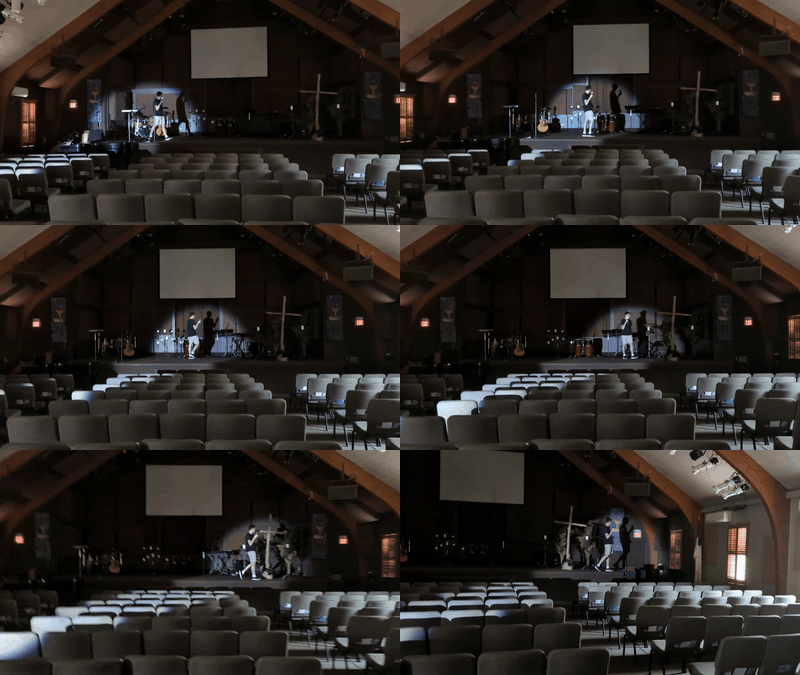
The demo application was theater: a moving-head spotlight that follows an actor, including through a wall so the light can preset before they appear.
How It Works
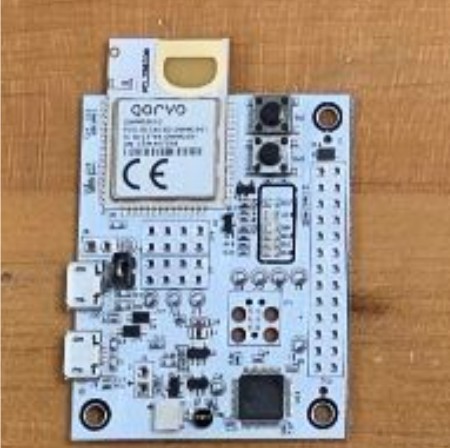
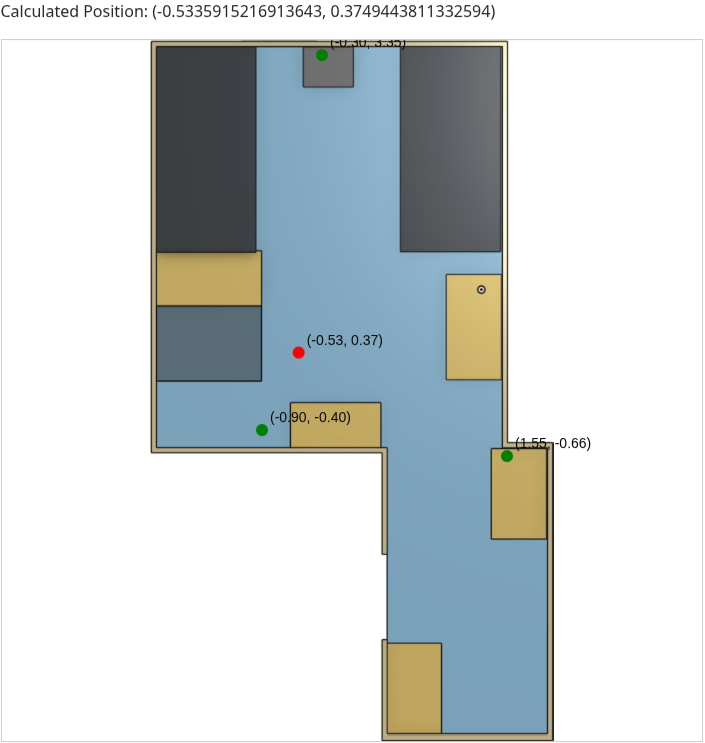
Our tags and anchors run Double-Sided Two-Way Ranging on Qorvo DWM3000 radios. Distances go over an OpenThread mesh as CoAP posts; three or four ranges feed trilateration on a Raspberry Pi 5. I did the UI, position estimation, and system integration — including the web dashboard that plots the tag against the anchors and lets you place them when the system moves to a new room.
A discovery broadcast with address-based time slots keeps multiple anchors from answering at once.
Hardware
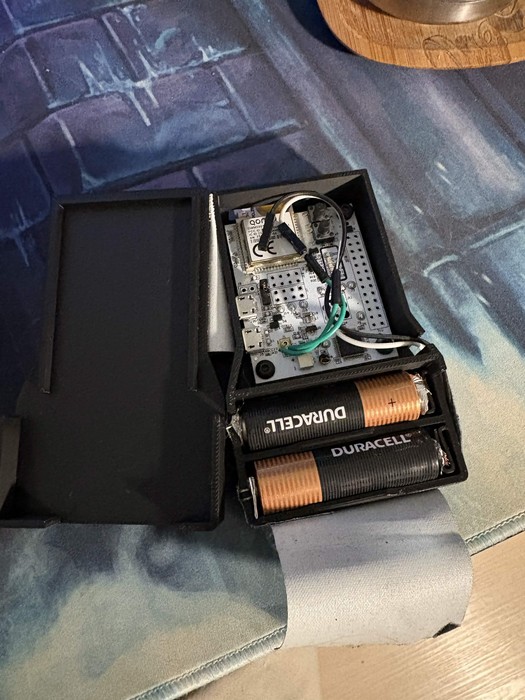
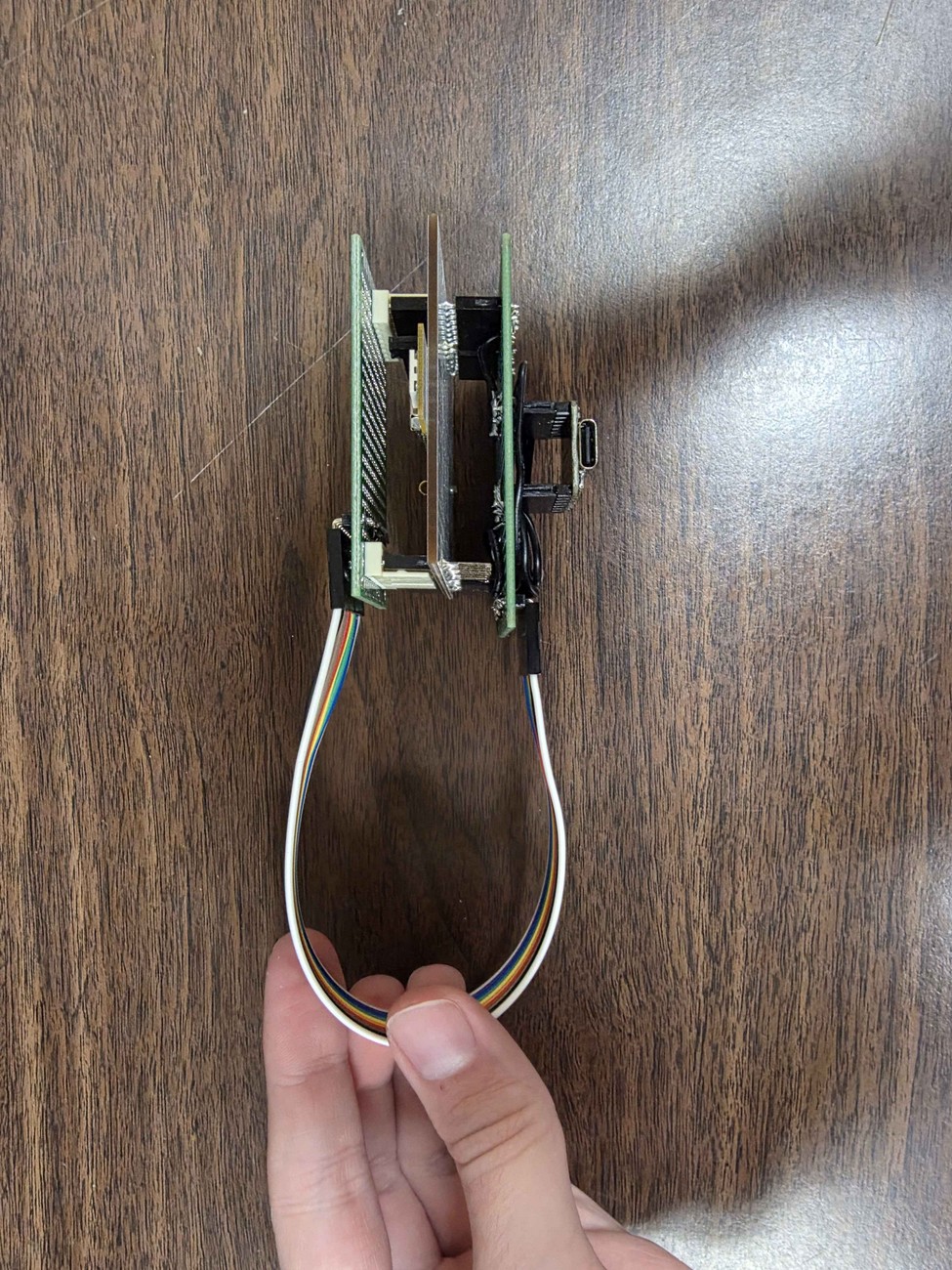
We ran the capstone on nRF52840 development kits with DWM3000EVB shields as anchors, a DWM3001CDK as the tag, and a Raspberry Pi 5 as the CoAP and SQLite host. The tag runs on two AA cells — about 60–80 hours at 0.1 W.
Result
Tracking accuracy was ±0.15 m. We drove a moving-head from the tracker, including a through-wall test. Multi-tag ranging is in the firmware but was only exercised with one tag.
Next Steps
The capstone is finished. I'm continuing this on my own as a live theater system: track actors and props, and steer a moving-head spotlight from the tag position.
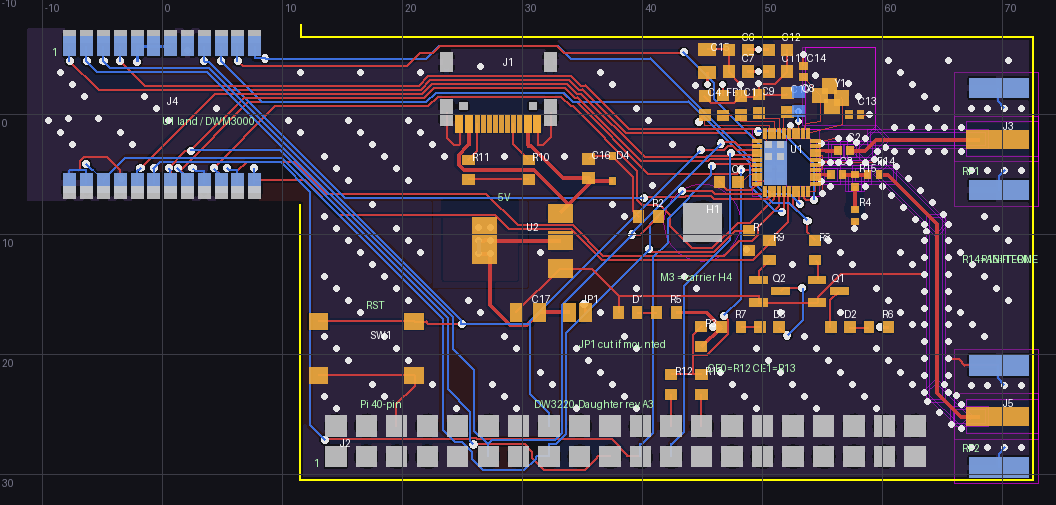
I designed a chip-down DW3220 daughter board so a future anchor can use two antennas for phase-difference of arrival instead of living on eval kits. Rev A3 is a 4-layer board with dual edge-launch SMA, USB-C, and a Pi header; ERC and DRC are clean. The custom PCB is designed but not yet fabricated.