Technical · In progress
Sparks: Animatronic Dragon
September 2023 - Present
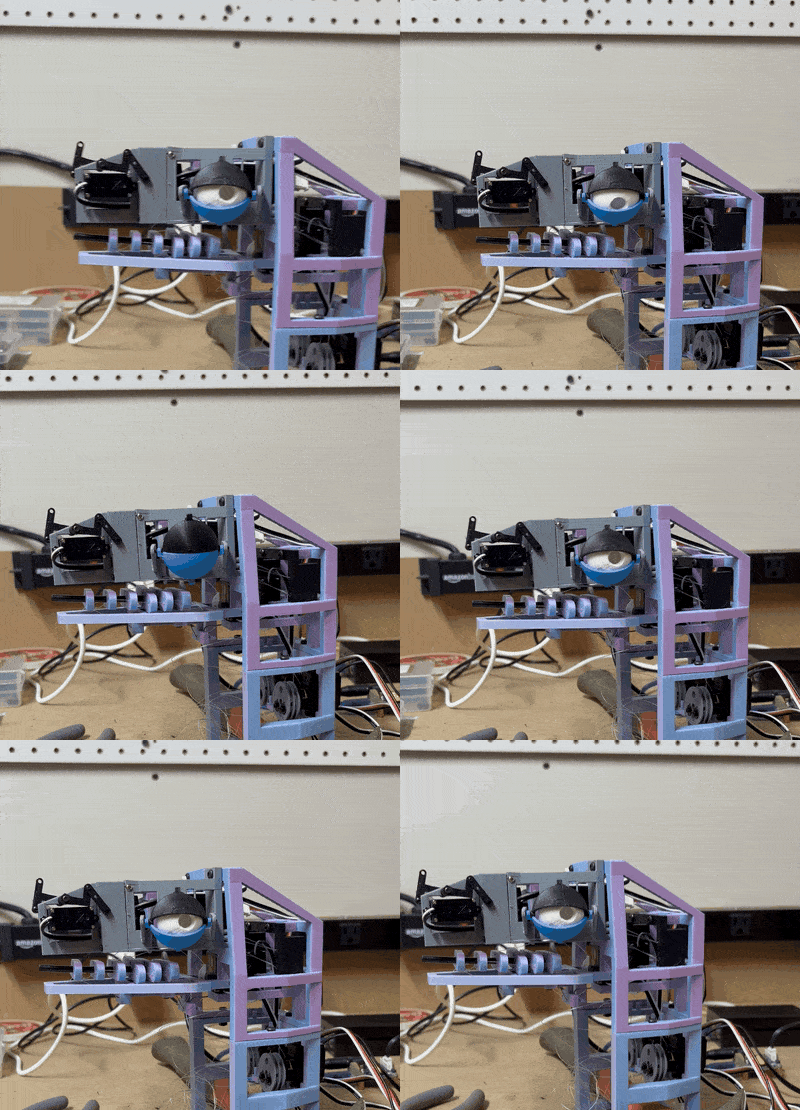
The current dragon head: nine SC09 servos in the head, six ST3215s in the neck, cameras in both eyes, driven from a Raspberry Pi 5.
Currently being built — not finished, and not yet worn. The earlier v3 build is archived.
Head Mechanisms
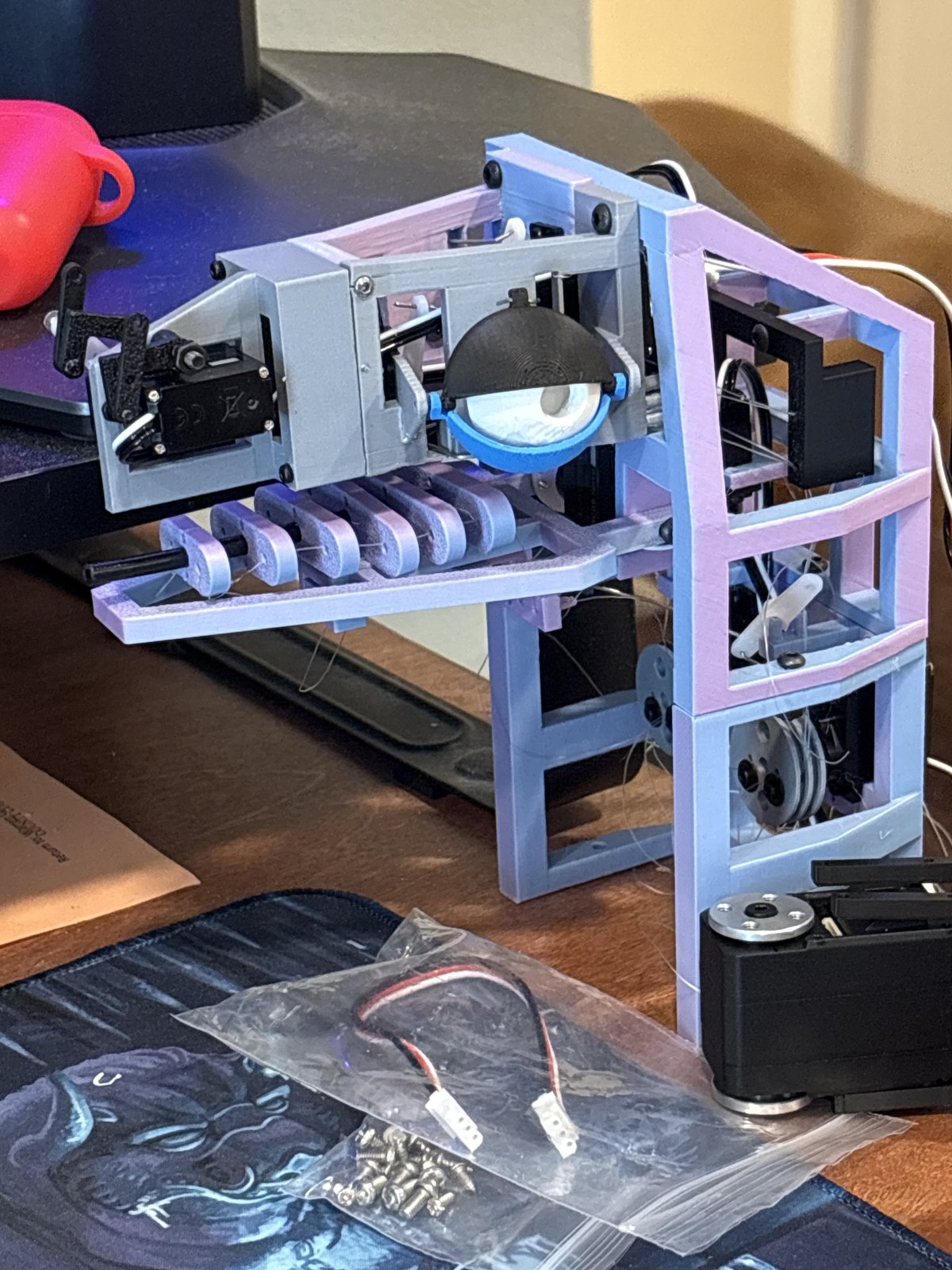
Nine WaveShare SC09 small bus servos drive the head. One moves the nose up and down. Two drive the top and bottom eyelids separately. One drives the jaw.
Two servos move the eyeballs on X and Y through string. Two move the tongue on X and Y through string. A metal-wire control rod, driven by one more servo, moves the tongue forward and back.
Neck
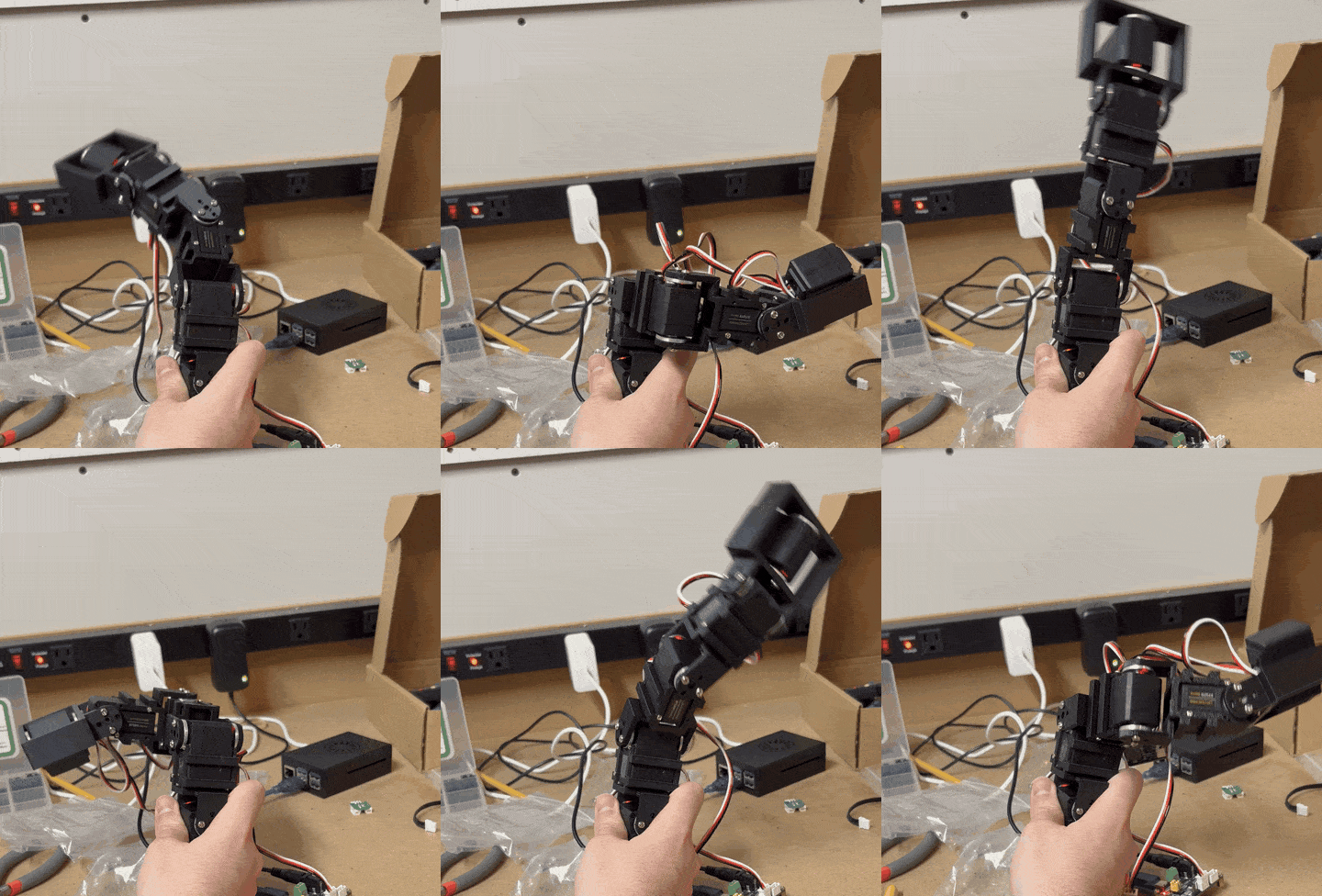
The neck is the same design as v3: six servos, same axes of motion, carried over from the previous version. The neck servos are WaveShare ST3215 20 kg bus servos. Head and neck together are 15 servos — every main axis currently designed.
Planned Additions
Three more servos are planned. None of them are built or prototyped yet. One would extend wings that poke out of a backpack the dragon is housed in. Two would drive a tail that sticks out the bottom of the backpack. That would bring the total to 18.
Control System
The main processor is now a Raspberry Pi 5, upgraded for onboard AI/compute and camera control. Both eyeballs are hollowed out internally to fit a small Raspberry Pi camera module in each eye.
The Pi 5 connects to a WaveShare bus servo controller board. All head SC09s and neck ST3215s daisy-chain off a single signal wire on that board. A WaveShare voltage step-down regulator sits inline so every servo on the shared bus gets the correct voltage.